
- Home
- Services Details
Tile Floor Coating and Floor Stripping
A worn floor does not always need replacement. I am David Madsen, founder of Raiden Restoration, and I strip failed finishes, correct buildup, and apply compatible coatings so the surface looks cleaner, wears more evenly, and is easier to maintain.
Why Raiden Restoration Removes Failed Finish Before Recoating
At Raiden Restoration, I do not cover a worn or contaminated floor with another layer of finish and hope it looks better. I first evaluate the existing coating to understand why the floor has become dull, discolored, scratched, cloudy, or uneven.
Old finish can hold embedded soil and residue below the surface, which is why repeated mopping may stop improving the appearance. VCT floors often show worn traffic lanes, heavy buildup around edges, and inconsistent gloss. Coated tile may also develop peeling or hazy areas when previous products no longer bond properly.
My approach is to remove failed finish carefully while protecting the flooring underneath. The stripping solution, agitation method, equipment, and moisture control are selected according to the surface and existing coating.
Proper preparation gives the new finish a cleaner, more stable surface to bond to. Raiden Restoration focuses on correcting the condition of the floor rather than simply hiding it under additional product. That helps produce a more uniform appearance and a finish that is easier to maintain.
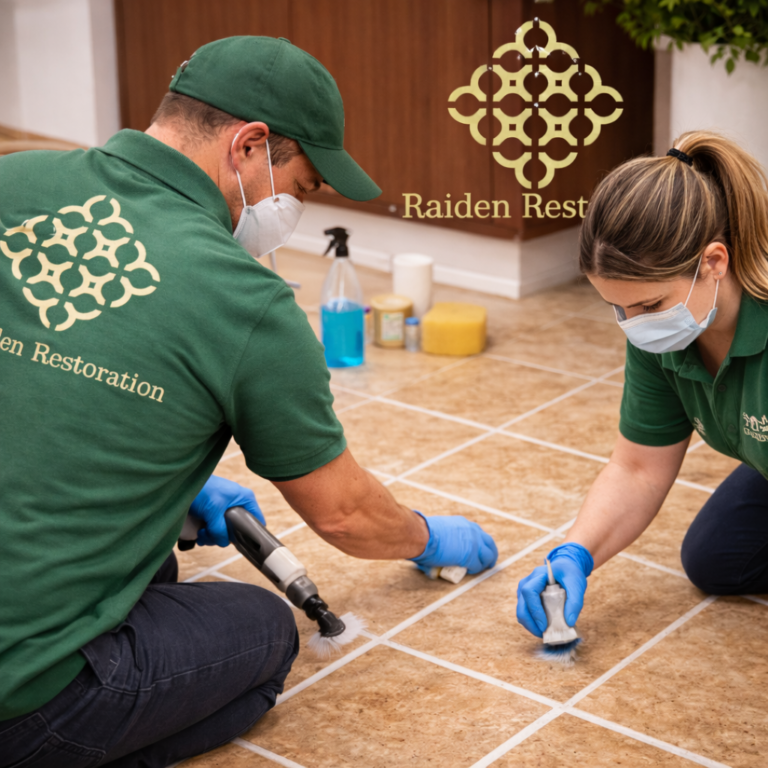
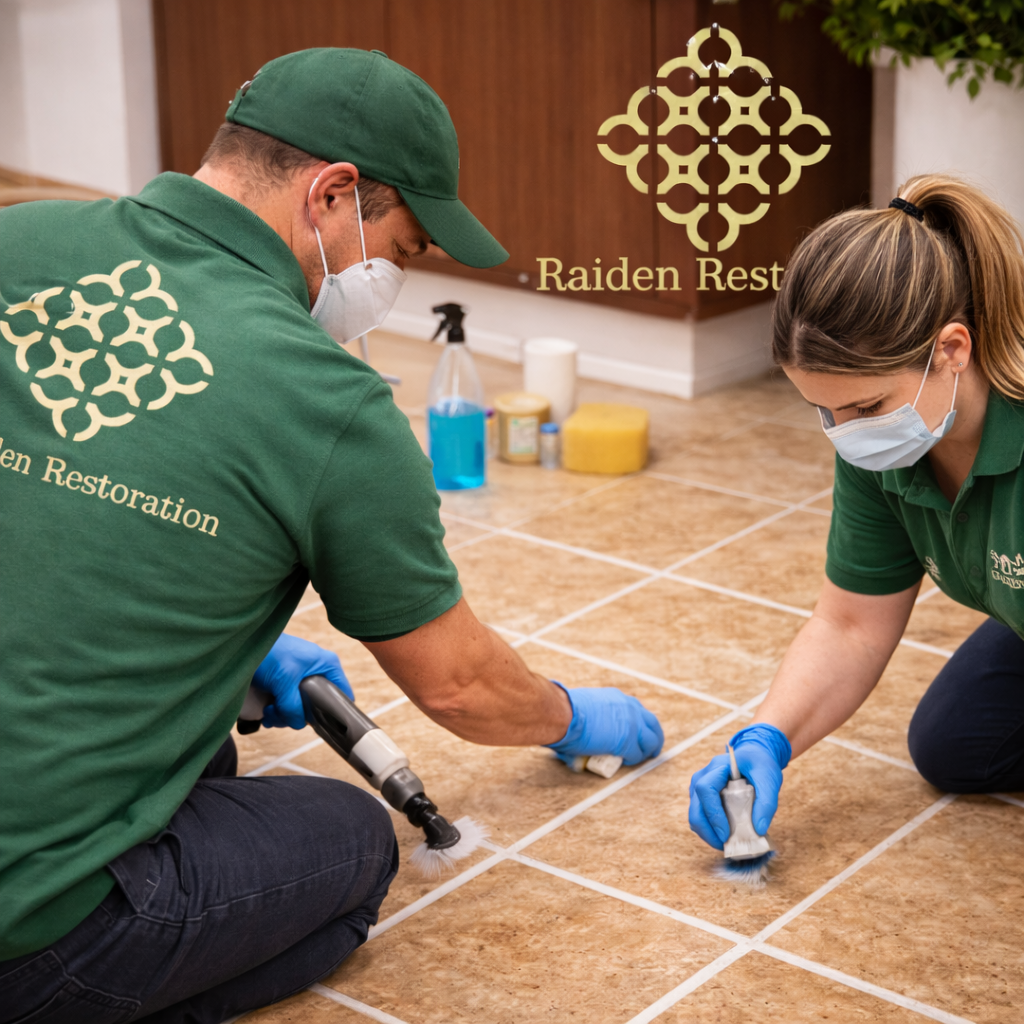
How Raiden Restoration Handles Stripping and Coating
Raiden Restoration approaches stripping and coating as a surface restoration service, not simply a wax application. I first identify the flooring material, existing finish, buildup level, and condition of the underlying surface before deciding how much removal and preparation are needed.
Raiden Restoration also keeps expectations realistic. Stripping and coating can improve worn finishes, dull appearance, and surface protection, but it cannot correct cracked tile, loose flooring, serious structural damage, or movement beneath the floor.
When coating is not the right solution, I explain why and recommend the appropriate next step.
Our Floor Coating and
Floor Stripping Service Includes
VCT Stripping and Waxing Service
A VCT stripping and waxing service removes tired acrylic finish that has become scratched, dull, yellowed, or uneven. I strip the old layers, remove residue from edges and traffic lanes, then rebuild the finish in controlled coats. The result is a cleaner appearance, more consistent gloss, and easier routine maintenance afterward.
VCT Cleaning and Waxing
VCT cleaning and waxing is appropriate when the existing finish remains well bonded but has lost appearance through normal wear. Instead of stripping everything, I determine whether cleaning, burnishing, and additional finish can restore protection. This avoids unnecessary removal when the base layers are still stable, clean, and performing properly.
Commercial Floor Stripping
Commercial floor stripping addresses finishes that have become embedded with soil, marked by equipment, or uneven from repeated recoating. For people searching for commercial floor stripping near me, I focus first on identifying the floor material and existing finish. That prevents aggressive chemistry or pads from damaging the actual surface underneath.
Tile Floor Coating For Protection
A tile floor coating can add protection and a more uniform appearance when the tile, grout, and existing surface preparation support proper bonding. I check porosity, previous sealers, moisture exposure, and traffic before recommending coating tile. Dense glazed surfaces may require a different treatment instead of another topical finish layer.
What I Check Before I Consider a Coated Floor Finished
A floor is not complete just because it reflects light. I check appearance from different angles, clean transitions at edges, coverage through traffic paths, and whether the finish has dried without tacky spots, haze, trapped debris, or visible applicator lines.
I also consider how the space will be used. Chairs, carts, moisture, cleaning chemicals, and foot traffic all affect coating performance, so I give care guidance that matches the surface and finish.
If adhesion risk, damaged flooring, moisture, or an incompatible prior treatment makes recoating a poor choice, I explain that before work begins. Honest scoping protects both the floor and your budget.
How I Strip a Failed Finish
and Build the New Coating Correctly
Identify the Floor and Finish
I begin by identifying the flooring material, existing finish, and the reason the surface failed. Gloss loss, yellow buildup, peeling, black traffic lanes, and edge accumulation point to different causes. This inspection tells me whether the floor needs complete stripping, partial correction, cleaning, or a different restoration method altogether first.
Remove the Old Finish
I apply the stripping solution at the strength and dwell time suited to the finish, then agitate it with appropriate equipment. The softened coating must be removed before it dries again. Corners, edges, and low spots receive separate attention because residual finish there can show through the new coating later.
Rinse and Prepare the Surface
After the old finish is removed, I extract the slurry and rinse away remaining chemistry and residue. The floor must be clean and fully ready before coating begins. Skipping this stage can leave alkaline residue, moisture, or contamination under the finish, leading to cloudiness, weak bonding, or premature wear later.
Apply the New Finish Coats
I apply compatible finish in thin, controlled coats and allow proper drying between applications. Building the surface gradually produces more reliable coverage than one heavy layer. Before the job is complete, I check gloss consistency, edges, traffic areas, tackiness, and visible application marks so the finish cures evenly across the flooring.
Why Floors Start Looking Dull And Uneven Over Time
The dullness and unevenness cannot come suddenly; it usually happens slowly, but most homeowners cannot notice it. Recently, one of my clients from Lynnwood hired me for stripping and coating service. But when I went to their place and saw the floor, the condition of the floor was very bad. I asked some questions: which floor cleaner you are using and what are you noticing? He said that for the last 2 years, he has seen some of the areas losing their shine, and some areas still look fresh. Then slowly, slowly this happened.
At that point I told him, first you are doing wrong cleaning because cheap detergents harm your floor, and the second reason is that you are late. Because when you notice any kind of issues again, call me or just consult with me. Early fixes save time, money, and energy.
This is the story of Adam, but there are some things that, if you do, you destroy your floor itself. For example, dirty mop water, harsh chemical cleaners, excessive moisture exposure, failed floor finishes, heavy foot traffic, improper maintenance products, layering new wax over old coatings, and skipping deep floor maintenance for years.
Common Problems We Restore During Stripping And Coating
Honestly, learning from experience creates a huge impact. For example, now, before fixing the problem, I check and notice some of the floor patterns that show me what the actual cause of this problem is.
Every client has a different structure of the floor, every floor has different problems, and for every problem there are different solutions.
For example, if your place is a commercial one, then the floor develops black traffic lanes, sticky residue, uneven gloss appearance, and coating separation.
On the other hand, residential floors usually develop dull kitchen paths, yellowing wax buildup, cloudy finish appearance, and embedded dirt trapped inside older coatings.
If you want to check whether your floor needs stripping and coating service, then you need to look for some signs, and those are peeling floor finishes, uneven coating thickness, discoloration around grout lines, slippery residue buildup, cloudy reflective surfaces, dark contamination around edges, moisture staining underneath coatings, and premature coating breakdown.
If you notice any of these issues, that means your floor needs proper stripping and coating service.
Stop Adding Finish
Over a Floor That Needs a Fresh Start
If your floor stays dull, cloudy, scratched, yellowed, or uneven after cleaning, the existing finish may be the problem. Raiden Restoration can determine whether stripping, recoating, VCT care, or another restoration approach makes sense. If you are searching for stripping and waxing floors in Lynwood, WA or floor waxing companies in Lynwood, WA, start with a surface assessment instead of another layer of product.
Call Us 24/7
206-458-9942
Got Questions? We’ve Got Answers
How Does a VCT Strip and Wax Service Work?
A VCT strip and wax service dissolves old finish, removes residue, prepares the tile, and applies several controlled finish coats for renewed protection and appearance.
How Often Should VCT Floors be Stripped and Waxed?
VCT stripping frequency depends on traffic, maintenance, and finish buildup. Well-maintained floors may go much longer between full stripping cycles than heavily used commercial surfaces.
Can You Put a Coating on a Ceramic Tile?
A coating can work on some ceramic tile, but glazed surfaces may resist adhesion. The tile, grout, moisture exposure, and existing sealer must be evaluated first.
How Do You Get Wax off a Wood Floor Safely?
Wax removal from wood depends on the existing finish and product used. Aggressive floor stripping chemicals can damage wood, so the surface should be identified first.
Is Stripping Better than Adding Another Coat of Floor Finish?
Stripping is better when the existing finish is contaminated, yellowed, peeling, or excessively built up. Recoating is more appropriate when the bonded base finish remains clean and sound.
Contact with us for any advice
Need help? Talk to an expert
- 206-458-9942
- davidmadsen91@gmail.com
- 4105 Shelby Road, Lynnwood, WA 98087