
- Home
- Services Details
Professional Stone Polishing Services
Stone can lose its clarity long before it is worn out. I restore dull, scratched, etched, and uneven natural stone surfaces by matching the polishing method to the material, its current finish, and the level of damage already present.
When Your Stone Loses Its Finish, We Can Bring Back Its Natural Appearance
At Raiden Restoration, I restore marble, travertine, limestone, granite, and other natural stone surfaces that have become dull, scratched, etched, or uneven over time. These problems usually affect the finish at the surface, which means the stone may still have plenty of life left without needing replacement.
Before recommending any treatment, I look at what caused the change in appearance. Foot traffic can wear down polished areas, acidic spills can etch marble and limestone, and incorrect cleaners can leave residue that makes stone look cloudy. Scratches and surface wear also interrupt the way light reflects across the stone.
My approach is to restore the surface itself rather than cover the problem with wax, coatings, or temporary shine products. When the stone is structurally sound, Raiden Restoration can often improve its clarity, smoothness, and overall appearance through the right combination of honing, refinishing, and polishing.
How Raiden Restoration Approaches Professional Stone Polishing
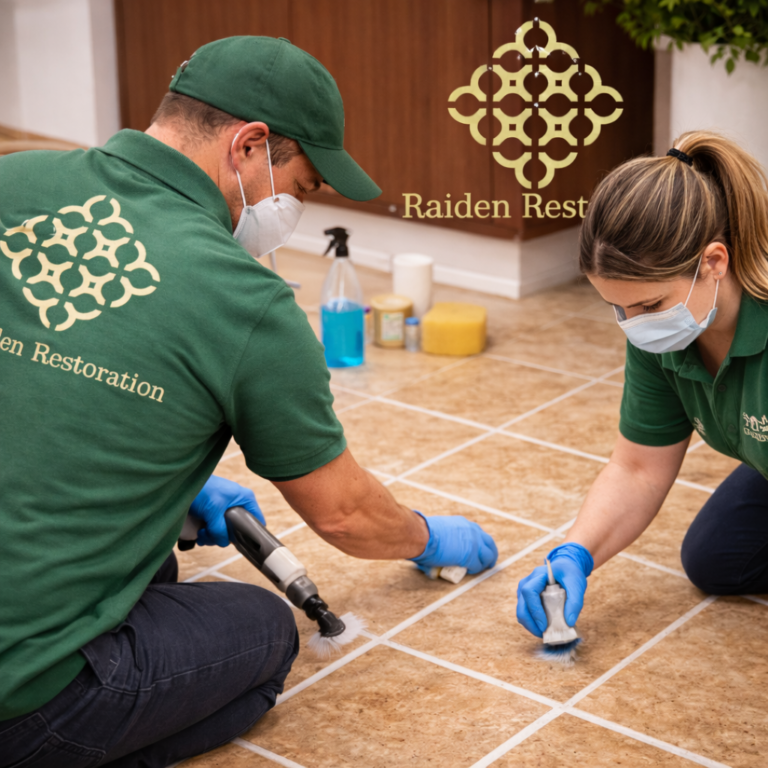
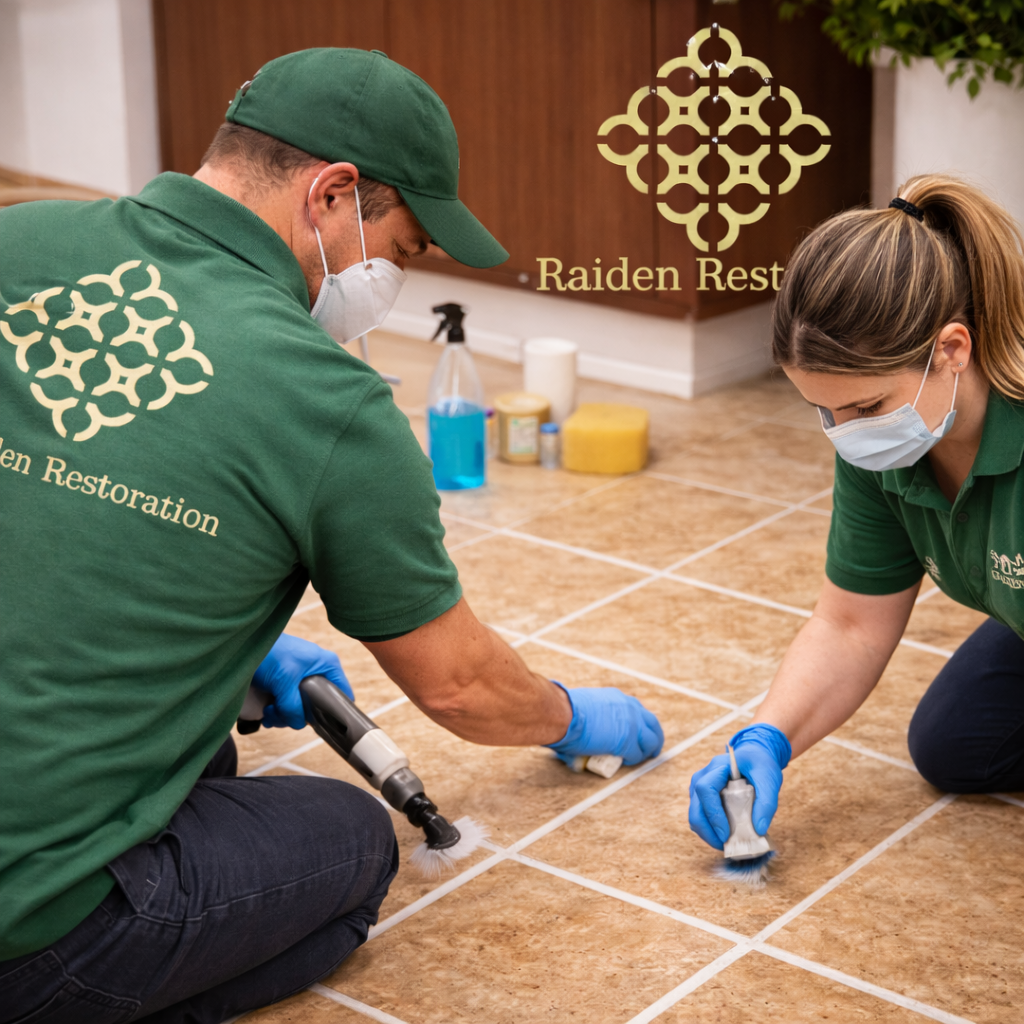
Professional stone polishing at Raiden Restoration is based on the type of stone, its current finish, and the depth of the damage. I do not use the same polishing method on every surface because marble, granite, travertine, and limestone respond differently to abrasives and finishing techniques. If the damage is more serious than the polish layer, I address that first. Scratches, heavy etching, uneven tiles, or lippage may require honing or grinding before polishing begins. This prevents the surface from becoming glossy while visible defects remain underneath.
At Raiden Restoration, the goal is not simply to make stone look shiny. I focus on creating an even, natural finish that looks consistent across the entire surface while preserving the character, movement, and variation that make natural stone unique.
Stone Polishing Options
for Floors, Counters, and Detailed Surfaces
Marble Floor Refinishing
Marble floor refinishing corrects surface wear that normal cleaning cannot remove. I evaluate scratches, etch marks, dull traffic lanes, and previous coatings before choosing the abrasive level. The finish can then be refined gradually, helping polished marble reflect light evenly without covering the stone with wax or topical gloss products.
Travertine Floor Polishing
Travertine floor polishing restores clarity when traffic, residue, or previous maintenance has left the surface inconsistent. A travertine polish must respect filled pores, soft areas, and existing repairs. I refine the surface in controlled stages so the floor looks balanced instead of overly glossy in some areas and dull elsewhere.
Granite Polishing
Granite polishing requires harder abrasives than marble because granite contains minerals that resist softer polishing methods. I focus on worn reflection, fine scratches, edge dullness, and finish mismatch. The goal is a consistent surface that shows the stone clearly without relying on silicone sprays, waxes, or temporary shine-enhancing products.
Polishing Marble Tile
Polishing marble tile is about restoring a uniform finish while keeping the natural movement and color differences visible. I check tile edges, grout transitions, previous repairs, and isolated etching before polishing. This helps prevent a patchy result where individual tiles reflect differently even though each tile appears shiny up close.
The Finish Is Not Complete Until It Looks Consistent.
Professional marble restoration should be judged by the whole surface, including edges, corners, transitions, and the way the finish reads from normal standing height. A bright patch in the middle of a floor does not mean the restoration is complete.
My final check focuses on finish consistency rather than chasing the highest possible gloss. Some stone is intended to remain honed or softly polished. Some floors have repairs, filler, or mineral variation that reflect differently by nature. I explain those limits instead of trying to disguise them with coatings.
For residential marble restoration, I also give care guidance based on the finish that is left behind. Neutral cleaners and quick spill removal matter more than frequent polishing products. The purpose of professional work is to give the stone a correct finish and make that finish easier to maintain.
How I Restore a Stone Finish
Without Polishing Over the Real Problem
Identify the Stone and Damage
The first step is identifying the material and deciding whether the problem is residue, etching, scratching, coating failure, or deeper surface damage. I inspect reflections from several angles and test an inconspicuous area when needed. This tells me whether polishing is enough or whether honing must happen before finishing begins.
Clean and Prepare the Surface
Stone must be clean before polishing because soil, oil, old wax, or cleaner residue can interfere with abrasives and create an uneven finish. I remove surface contamination with products appropriate for the stone, then allow the area to become workable. Clean preparation gives the polishing stage a predictable starting surface.
Refine the Stone Surface
When honing is needed, I move through an abrasive sequence chosen for the stone and damage depth. Each stage removes the scratch pattern left by the previous stage. Skipping steps can leave haze or visible swirls, so I refine the surface gradually until it is ready for its final finish.
Polish and Inspect the Finish
The final polishing stage brings the stone to the agreed sheen, then I detail edges and transitions that larger machines cannot reach. I inspect the floor or counter from multiple viewing angles. Consistent reflection matters more than isolated gloss because uneven polishing becomes obvious when light moves across the surface.
Common Stone Problems We Restore
In these 35+ years, I have noticed that most surfaces develop predictable restoration problems depending on how the stone was maintained over the years. Marble floors commonly develop cloudy traffic lanes, dull reflection, etching near kitchens, and uneven shine from acidic products. Travertine surfaces usually develop dark pores, moisture absorption problems, rough texture, and contamination buildup inside open holes. Limestone surfaces become sensitive when homeowners repeatedly use harsh chemicals that slowly weaken the finish over time. Natural stone showers commonly develop soap scum layering, hard water buildup, moisture staining, and bacterial contamination inside porous areas.
If you notice any of these issues, then fix them as soon as possible because the earlier the issue is corrected, the easier the restoration process becomes. Surfaces neglected for too long usually require much deeper correction work.
If Your Stone Still Looks Dull After Cleaning, It May Need Its Finish Restored
If cleaning no longer changes the appearance, stone polishing may correct the wear that has developed at the surface. Tell Raiden Restoration what stone you have, where it is installed, and what you are seeing, and I can help determine whether polishing, honing, or a different treatment makes sense.
Call Us 24/7
206-458-9942
Got Questions? We’ve Got Answers
How Do You Polish Marble Flooring Professionally?
Professional marble polishing starts with cleaning and damage evaluation. Depending on wear, the surface may be honed with diamond abrasives before polishing compounds restore clarity and reflection.
How Long Does Stone Polishing Usually Take?
Most stone polishing projects depend on square footage, damage depth, furniture access, and edge detail. Small areas may take hours, while larger restoration projects can require multiple days.
Can Polishing Remove Scratches and Etch Marks from Marble?
Polishing can correct light wear and minor dullness, but deeper scratches and strong etching usually require honing first. Severe damage may need grinding before the final polish.
How Do You Make Marble Shine Without Damaging It?
Marble shine comes from refining the stone itself, not adding wax. Use neutral cleaners for maintenance and avoid acidic products, abrasive powders, or untested polishing compounds.
Can Travertine be Polished After it Has Become Dull?
Yes. Travertine can often be honed and polished when the stone is structurally sound. Existing filler, deep scratches, stains, and uneven tiles may require additional restoration first.
Contact with us for any advice
Need help? Talk to an expert
- 206-458-9942
- davidmadsen91@gmail.com
- 4105 Shelby Road, Lynnwood, WA 98087